
The Rockies won’t ever sign a player to a mega-contract again
History shows the franchise being averse to making the same mistake twice, which means they'll never go down the Arenado path again

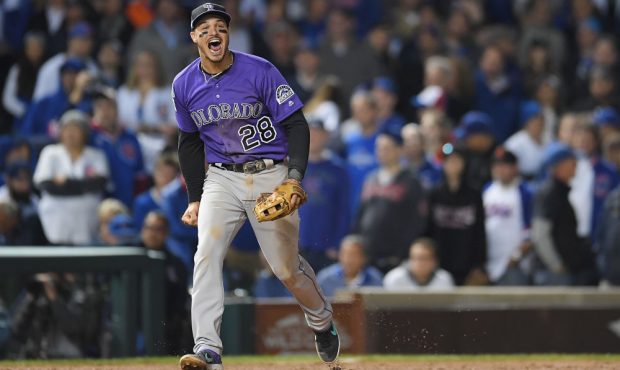
(Photo by Stacy Revere/Getty Images)
(Photo by Stacy Revere/Getty Images)
One thing is true about the Rockies. They don’t make the same mistake twice.
While that’s usually a good trait, one that prevents repeat blunders, it can also be paralyzing. Because of past failures, Colorado’s front office is gun shy to make bold moves.
Back in 2001, the Rockies spent big on starting pitchers. They gave Mike Hampton the richest contract in the history of sports at the time, signing him to an eight-year, $121-million deal. At the same time, they inked Denny Neagle to a five-year, $51-million contract.
It was a big splash. It was a sign that Colorado was serious about building a contender. And it didn’t work out.
In two seasons with the Rockies, Hampton went 21-28, with a 5.75 ERA. In three years in purple pinstripes, Neagle went 19-23, with a 5.57 ERA.
In the two decades since, Colorado has never spent big on a starting pitcher. In fact, they traded away an ace before he was due for a hefty raise, sending Ubaldo Jimenez to Cleveland in 2011. Don’t be surprised if they soon do the same thing with German Marquez.
Prior to the 2018 season, Jeff Bridich assembled the most-expensive bullpen in Major League Baseball history. The Rockies general manager gave Wade Davis a three-year, $52-million deal, while also signing Jake McGee and Bryan Shaw each to three-year, $27-million contracts. And it didn’t work out.
Davis lost his job as the team’s closer, while McGee and Shaw were so unreliable that they were eventually released. Colorado’s bullpen was a weak link in their back-to-back losing seasons in 2019 and ‘20.
The Rockies haven’t spent big on a relief pitcher since. They even let Adam Ottavino walk after the 2018 season.
So it stands to reason that the Nolan Arenado situation will also permanent impact the way the team operates. After giving the third baseman an eight-year, $260-million contact, the five-time All-Star was traded less than two years after signing the deal.
Colorado is also reportedly committing $50 million to help Arenado’s new team, the Cardinals, pay the nearly $200 million remaining on the contract. That means the Rockies will have spent more than $100 million for two seasons with Arenado at third base.
They won’t make that mistake again. There’s little to no chance the club ever signs a homegrown star to a mega-contract. They’ll trade them away before the big money ever comes due, creating a revolving door of prospects to get excited about.
While this might seem like smart business, it’s wrought with pitfalls. Pro sports is littered with bad deals. Even the best franchises make mistakes.
So to avoid ever going down a path again because it once turned out bad is silly. Eventually, there are no more paths to take.
Instead, it’s about identifying the true error. It’s about seeing the root cause of the problem.
It’s not that paying a starting pitcher is a bad idea. But giving big money to one that relies on breaking balls isn’t smart when half of your games are played at Coors Field. The same goes for relief pitchers.
Was the Arenado deal a mistake? It turned out to be one, but that’s not because Colorado chose to pay its star player. It’s because Bridich arrogantly chose to get into a public dispute with the All-Star.
It seems like clearly outlining the Rockies financial situation to the third baseman would’ve been easy. Heading into the 2020 season, Colorado was locked into a lot of bad contracts – Davis, McGee, Shaw and Daniel Murphy. That prohibited them from spending any more money.
But if the ‘20 campaign was another losing one, not a foregone conclusion given that the Rockies made the postseason in both 2017 and ‘18, they could move in a different direction. Then, they’d have the financial freedom to pivot.
How hard is that to explain? It’s not. But a Bridich apparently couldn’t, or wouldn’t, do it.
As a result, he burned the bridge between the organization and Arenado. Friday’s trade was the result.
Colorado is smart to not make the same mistake twice. The problem is that they don’t truly understand what mistake the made.
That’s paralyzing. And that’s a problem in pro sports.
Related
 Jokic quiet, Jamal struggles, Johnson hurt as Nuggets debut fades in worst offensive game since 2019
 Davis Webb thinks Bo Nix is ready to go on a little run
 Broncos have Surtain, Coleman at practice for second-straight day
 Aaron Gordon could be the deciding factor of the Nuggets season
 2026 Broncos averaging fewest yards per play in franchise history… for now
 Courtland Sutton says ‘tide is going to turn’ and people will call Bo Nix ‘the best’

Comments
0 Comments