
Should Nikola Jokic face backlash for taking the supermax?
As stars like Victor Wembanyama accept smaller deals to improve their teams, the morning show wonders if Jokic will be held to the same standard
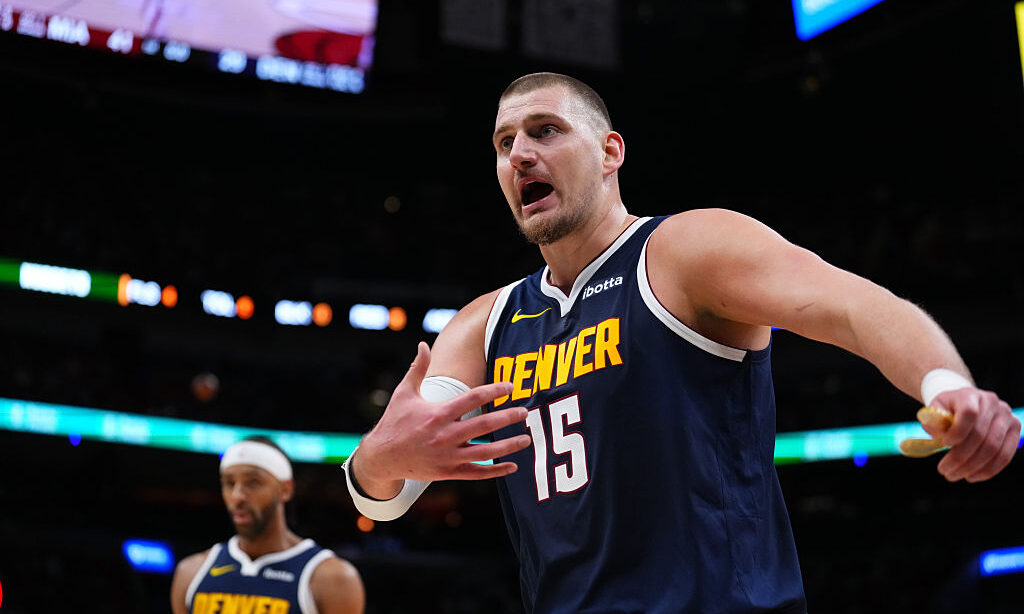
Photo by Rich Storry/Getty Images
There is a new dynamic taking shape at the top of the NBA. Superstars are starting to leave money on the table. Not because they are being forced to. Not because the market has shifted against them. But because they are choosing to prioritize team-building flexibility over personal financial maximization.
Victor Wembanyama is the latest example. A generational talent whose recent contract terms will give the San Antonio Spurs the kind of cap breathing room that could accelerate their championship timeline by years.
That trend has now positioned itself directly in front of the Denver Nuggets.
Nikola Jokic is due for a new contract next summer. And his supermax option comes in at a staggering five-year deal worth nearly $360 million. It is the largest number available to him under the current collective bargaining agreement and he has earned every dollar of it. But the question the league is starting to ask, and the question the Nuggets front office is quietly hoping he answers a certain way, is whether Jokic might follow the Wembanyama model and take less.
On a recent edition of “Stokley and Evans, with Mark Schlereth” on 104.3 The Fan, fill-in hosts John Davis and Chad Andrus took on the more difficult version of the question. Not whether Jokic should take less, but whether he should face backlash if he doesn’t.
Davis asked it directly.
“If Jokic doesn’t take less money. He re-signs with the Nuggets next summer for a gajillion dollars, whatever it is, and it’s the supermax, it’s the most he can get. Should he receive backlash for that?” Davis asked.
Andrus answered with a framing that captures where the modern NBA is heading.
“I think he’s potentially the last guy, and I guess maybe Giannis you might throw in here – they’re the last two guys I think that are gonna be able to do this and not get scrutinized,” Andrus said.
Andrus is essentially arguing that Jokic exists in a small, closing group of superstars who have earned enough résumé equity to sign for the maximum without inviting public criticism. Champions and MVPs get exemptions. Everyone else, going forward, will be measured against the Wembanyama standard.
Andrus then explained the logic behind that shift.
“Because they’ve won championships and they’ve won MVP’s. And anyone else that hasn’t done that. Ownership and fanbases when contract negotiations come up, and a max is on the table or in the discussion, everyone is going to look at it and say, ‘Victor Wembanyama didn’t take the max; you’re not as good as him,'” Andrus said.
That’s where the culture is trending. Every future max negotiation is going to be shadowed by what Wembanyama just did. Fans, ownership groups and media outlets will hold up his willingness to prioritize team success as the new benchmark for how the game’s best players should behave when it comes time to sign. Anyone without a title or an MVP on their résumé is going to be compared unfavorably to a player who chose team over self.
Jokic, however, sits in a different category entirely. Three MVPs. A championship. A Finals MVP. A legitimate case as one of the greatest offensive players in league history. He has done everything the sport has asked of a superstar. If he decides to take the full supermax next summer, the response should be gratitude that he continues to play in Denver, not scrutiny over the dollar figure attached to the deal.
The Wembanyama era may reshape the future of NBA contracts. But there are still a few players operating outside that framework. And Jokic, more than anyone else in the league, is one of them.
Related
 Peyton Watson breaks silence on playoff absence, calls coverage a ‘smear campaign’
 Fan-favorite Nuggets alternate jersey is coming back, per leak
 KSE expands sports empire, finally buys an MLB team
 Jokic takes backseat vs. Italy as Serbia finishes summer undefeated
 Serbia speeds through Iceland despite quiet Jokic night
 Nuggets make expected minor salary move to clear space

Comments
0 Comments