
Sean Payton gets respect from Brandon Stokley after taking back play calling
Sean Payton gave Davis Webb the offensive coordinator and play calling job this offseason and took it back after four weeks, and the morning show says acting this early took more guts than waiting would have
Watch: Does Sean Payton deserve RESPECT for taking back play calling? | Stokley and Evans with Mark Schlereth | 55 seconds
Sean Payton gave Davis Webb the offensive coordinator and play calling job this offseason and took it back after four weeks, and the morning show says acting this early took more guts than waiting would have.
This offseason, Sean Payton gave away the job that built his reputation. He handed the Broncos’ play calling to Davis Webb, a former quarterback with no NFL play-calling experience who had coached Bo Nix for two seasons. It was a bold move from a coach who will likely end up in the Hall of Fame because of what he does with a play sheet.
Four weeks into the season, Payton took it back.
He will call plays Sunday against the Los Angeles Chargers, ending the Webb experiment much sooner than anyone expected. The numbers explain why. Through four games, the Broncos are 2-2, 28th in the NFL in yards per game at 280.3 and 27th in points per game at 18.5. For an offense that added Jaylen Waddle and promised more explosive plays, those numbers weren’t close to good enough.
On a recent edition of “Stokley and Evans, with Mark Schlereth” on 104.3 The Fan, Brandon Stokley said he wasn’t bothered by the reversal. He liked it.
“I actually respect the move from Sean,” Stokley said.
His reasoning had to do with timing.
“I respect it because, you know, a lot of coaches I think in this situation, would be scared to make this move this early. And they would wait, and then all of a sudden it’s too late,” Stokley said.
That’s a real risk in the NFL. Coaches who have publicly backed a decision often stick with it longer than they should because changing course means admitting a mistake. By the time they finally act, the season can be out of reach. Denver is still in the middle of its six-game opening gauntlet, with the Chargers and Seahawks next, and can’t afford to lose a month waiting to see if things improve.
Stokley also admitted the move doesn’t make Payton look good.
“This isn’t ideal. Like, you make a change like this, and you know Sean told us, I mean he said, ‘I’m not gonna let this thing fail. I’m not gonna let Davis fail.’ Well it failed quickly. And so, all that stuff comes back, and you know, it’s pointing at you,” Stokley said.
Sean Payton made Webb’s promotion his decision and vouched for it publicly. When the offense sputtered, that promise came back to him, and so did the questions about why a coach with his résumé gave up his biggest strength in the first place.
Stokley’s point is that Payton made the change anyway.
“And so, to be able to make this move this early is not ideal, and doesn’t look good on Sean. But he still made it right? So, I look at that and say, all right, you know I respect the fact that he was like, ‘All right, I know I’m gonna take some bullets here, but I’m still gonna make this move, because this is the right thing for the team,'” Stokley said.
That’s the core of Stokley’s argument. Sean Payton chose the team’s results over his own pride. He knew the national media would call it a failed experiment, and he knew fans would question the original decision. He made the change because the offense needed one.
Not all of the struggles were on the play caller. Mark Schlereth put the 49ers loss “100%” on Nix after the quarterback passed up five or six open chunk plays in the first half. Still, Payton clearly felt the offense needed his voice to give Nix clearer answers and more rhythm early in games.
Sunday against the Chargers is the first test. If the offense finally looks like the one Denver expected this offseason, Sean Payton’s reversal will look like a smart correction instead of an admission that the plan didn’t work.
Related
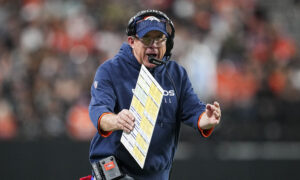 The challenge Sean Payton faces as one of the NFL’s oldest offensive play-callers
 J.K. Dobbins won’t say if he’s 100%, just trying to make plays
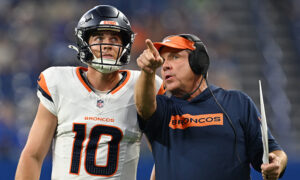 Sean Payton says Bo Nix, like everyone, is ‘disappointed’ Webb experiment didn’t work
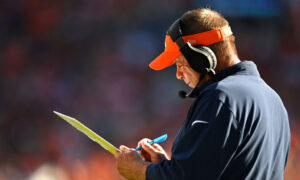 Sean Payton confirms he’s calling plays again for Broncos
 Broncos without Surtain, Moss and Bryant for second-straight day
 Sean Payton’s game day role explained by Mike Klis

Comments
0 Comments