
The failed Daiyan Henley trade costs the Broncos more than depth
The Broncos backed out of the deal after Henley failed his physical, and NFL insider James Palmer says Denver loses the flexibility it planned to add to its defense for the second half
Watch: How big of a piece would Daiyan Henley be to this Broncos defense? | Stokley and Evans with Mark Schlereth | 1 min
The Broncos backed out of the deal after Henley failed his physical, and NFL insider James Palmer says Denver loses the flexibility it planned to add to its defense for the second half.
The Broncos’ only move at the trade deadline has now been undone. Denver agreed to send a 2027 fourth-round pick and a 2028 fifth-round pick to the Los Angeles Chargers for inside linebacker Daiyan Henley. Then Henley failed his physical. The Broncos tried to renegotiate the compensation, the Chargers declined, and Denver rescinded the trade. Henley stays in Los Angeles, the Broncos keep their picks, and the deadline has passed.
That leaves the inside linebacker room as it was before the trade: Alex Singleton, Justin Strnad and very little proven depth behind them.
On a recent edition of “Stokley and Evans, with Mark Schlereth” on 104.3 The Fan, fill-in host Will Petersen asked NFL insider James Palmer whether this will become a bigger issue later.
“Clearly the Broncos felt like they needed more depth at inside linebacker, and now they don’t have it. Daiyan Henley will not be a member of this team. Is this a story that you think is just gonna kind of fade off over the next couple of weeks, or do you think this will come back into focus, obviously if Alex Singleton or Justin Strnad gets hurt that will certainly come up. The Broncos wanted to address this, and they couldn’t at the end of the day, because they couldn’t come to terms with the Chargers,” Petersen said.
Palmer said the injury risk isn’t the only cost.
“Yeah there’s a part of it, honestly Will, that I think like, it’s not being talked about enough, is like they were gonna become much more versatile as a defense. Much more versatile as a defense. The different packages that they were looking to use, perhaps all 3 on the field at a time, or it’s Singleton and it’s Henley, or it’s Strnad and it’s Henley. It’s different things that you wanna do,” Palmer said.
Most of the reaction to the trade focused on depth. Palmer’s point is that Henley also gave Vance Joseph new options. With three starting-caliber inside linebackers, Joseph could use three-linebacker looks against heavy personnel, rotate pairings by matchup and give offenses alignments they hadn’t seen on film.
“And I do think that was a big part that they were gonna lean on the second half of the season, and maybe add a new wrinkle to their defense,” Palmer said.
That matters because opponents have a lot of tape on this defense. Denver has played long stretches on defense this season, especially while the offense struggled early. The Broncos have trailed at some point in every game, and many of those games came down to the defense getting late stops.
“Obviously when you play the number of snaps that they have played, you know what’s out there. A ton of film on your defense, like a ton of film on your defense, ’cause they’ve played so many snaps. So now you have the ability to try to change some things and become more versatile,” Palmer said.
The trade was also a response to the problem Joel Klatt pointed out after the deadline. Denver ranks 10th in points allowed at 20.7 per game but 26th in yards allowed at 355 per game. Opponents have moved the ball between the 20s, and the Broncos have relied on red zone stops and late plays to make up for it. Adding another linebacker was supposed to help with tackling, run fits and coverage on backs and tight ends in the middle of the field.
Palmer said fatigue was part of the plan too.
“And you also take Singleton and Strnad off the field a little bit. Those guys have played a boatload of snaps for this team, and you can keep them fresher down the stretch as well,” Palmer said.
That links to a concern that has followed this defense for two years. Last season, the Broncos were on pace for the NFL sack record at midseason, then faded in December. Klatt described it as a defense that “leaks a little oil” late in the year. Giving Singleton and Strnad more rest was one way to prevent a repeat. Now both will likely keep playing heavy snaps unless Denver finds help in free agency or on its practice squad.
“So I do think it does impact some of the things that they were looking to do from a schematic standpoint, to give themselves some advantages to change some things up in the back end,” Palmer said.
The Broncos are 7-2, lead the AFC West and hold the AFC’s No. 1 seed. They also kept two Day 3 picks they were willing to trade. Petersen’s question about whether this fades away likely depends on Singleton and Strnad staying healthy. If either one gets hurt, the failed trade will come up again. Even if both stay healthy, Palmer says Denver lost the chance to change its defensive looks after nine games of film.
Related
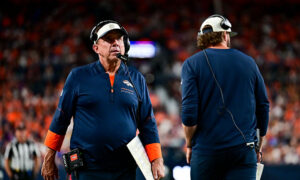 Does friction between Sean Payton and Bo Nix help the Broncos?
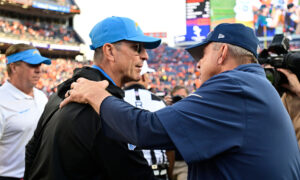 Jim Harbaugh accuses Broncos of using Henley’s physical to lower trade price
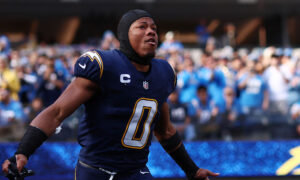 Report: Daiyan Henley’s knee had arthritis, causing Broncos trade to be called off
 Is the Denver Broncos 7-2 start to the season manic or just enough?
 Broncos QB Bo Nix had a quicker read, and that set up the Pat Bryant TD
 Jonathan Taylor was not worth the Colts’ asking price

Comments
0 Comments